The Value of the Welcome Call: Why We Speak With You Before We Plan

Marrakesh, Morocco

Marrakesh, Morocco

There is a type of fatigue that has nothing to do with planning a luxury trip badly. It sets in when you're planning alone, working through a form that asks whether you want "beach" or "mountains," whether your trip falls under "adventure" or "relaxation," and whether the occasion is "honeymoon," "anniversary," or "other." The checkboxes are not inaccurate. They are just asking the right questions in the wrong way. A form captures the what, but cannot capture the why.

The word "beach" fails to tell you whether the person wants to sit in silence for four days or be on a sailboat by eight in the morning. "Special occasion" does not describe what the event actually means to the person typing it, whether this is a trip to mark a long-overdue reunion or a milestone like an anniversary. The gap at the center of most luxury travel planning lies between what gets entered into a text field and what a trip actually requires. Forms, however well designed, are built to receive data. A journey is not data. It is a set of intentions, preferences, fears, and hopes that a person may not have fully articulated to themselves. That is, until someone asks the right questions, in the right order, and waits for the real answer. At Zicasso, the welcome call exists because of this gap. It is a solution that sees a personalized travel experience move from request to relationship.

Extraordinary travel begins with a human touch, and our destination specialists design every journey with care, insight, and personal attention. As you consider the trip you want to take, use the following information to help you understand how we work before reaching out to our experts to begin the arrangements.

Local Intelligence Advantage: How Zicasso Goes Beyond the Limits of an Algorithm

African safari with a wildlife specialist

Automation in travel has a ceiling because when the human is removed from the chain, nuance disappears.

Every trip request that arrives at Zicasso is reviewed by a real person before anything else happens. That review is skilled work. A trained eye reads between the lines of what has been submitted and listens, from the first conversation, for what wasn't said. Travelers are not assigned to a specialist. They are intentionally paired based on their travel style, personality, and the specifics of what they are asking for, including what they have not yet thought to ask for.

Assignment is a routing decision. Intentional pairing is a judgment call made by someone who knows the traveler and the specialist well enough to recognize a fit. It requires the kind of nuanced reading that no current system performs reliably because the signal is in the conversation that follows, not the submission.

A form captures destination, dates, approximate budget, group size, and category of experience. A human-curated travel consultation reveals the hesitation before answering a question about pace that tells a Zicasso Care Team member more than the answer itself. The enthusiasm that surfaces, unprompted, when a traveler mentions a meal in a city they visited 15 years ago. The family that wrote "beach," but meant no crowds, no organized entertainment, and somewhere their children could actually run. The couple who listed "wine" as an interest, but, when asked, meant they wanted to be the ones making it.

None of that lives in a form, but all of it shapes the bespoke itinerary planning that follows.
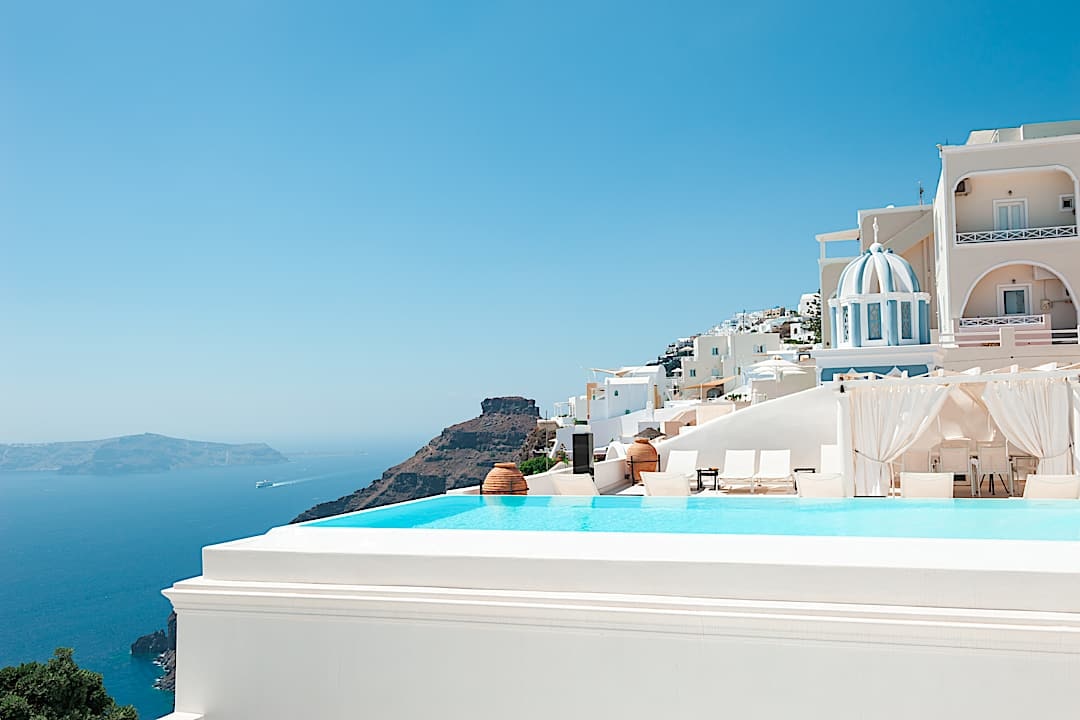
What Happens on a Zicasso Welcome Call: A Design Consultation Where Your Vision Meets Our Expertise

Santorini, Greece
Santorini, Greece

By the time the Zicasso Care Team calls, they already know something about you. They have read your trip request carefully and begun thinking about which luxury travel specialists might be the right fit. The welcome call, or design consultation, is the moment a process that has already started becomes a conversation.

What they are listening for goes beyond what you know to say. Pacing is one of the clearest examples. Most travelers describe what they want to do, but few think to describe how they want to move through a day. Whether they need an hour of quiet before the first activity or find slow mornings frustrating. Whether three hours at a single site energizes or drains them. Whether a day with no fixed structure makes them feel free or anxious. These are the details that determine whether an itinerary feels right from the first morning or subtly wrong in ways that are difficult to name later.

Budget conversations happen differently here, too. Speaking directly with someone who understands how different choices affect what you experience changes the nature of the exchange. A question about whether private transfers are worth the cost becomes a real conversation about your time, energy, and the alternatives. The abstract becomes specific and trade-offs become clear rather than opaque.

Even when no one picks up, the process stays personal. The voicemail that follows is not a system notification. It is a Care Team member introducing themselves by name, explaining the next steps, and signaling, in the 30 seconds it takes, the level of attention that will characterize every interaction that follows.

This is the reframe that matters. The personalized travel planning process at Zicasso does not ask for your time. It protects it. A few minutes replace days of misaligned back-and-forth. They replace the frustration of receiving a proposal that is technically responsive, but feels like it was written for someone else, because it was. Your time is the most finite resource in planning a meaningful journey. The Welcome Call is how Zicasso treats it accordingly.

Why the Design Consultation Is the Smartest Use of Your Time

Nice, France
Nice, France

The only non-renewable resource in luxury travel is not money, but time: the Tuesday afternoon you could be at your child’s game, the Saturday night you could be out with your partner, the week you have set aside to be away from everything that usually claims you. The design consultation treats that reality plainly. It does not ask for 15 minutes as a formality; it treats those minutes as an investment that must justify itself.

By spending that small slice of time in conversation with a human who has already read your brief, you are effectively buying back the dozens of hours you would otherwise spend researching destinations, comparing options, and second-guessing whether what you have assembled actually fits you. Instead of scrolling through pages of “best of” lists and reviews, you step into a conversation that compresses all of that noise into clear, tailored guidance from pre-vetted experts.

The real risk in planning alone is not making a mistake you can see, but ending up with an itinerary that is technically correct and emotionally vacant. Everything “works,” yet it does not feel like the trip you hoped for. The design consultation exists to prevent exactly that outcome. In a quarter of an hour, it moves you from generic possibilities to the beginnings of a journey that recognizes who you are, how you like to travel, and what this particular trip is meant to mark. In that sense, it is the shortest path to the kind of total seamlessness travelers often describe only in hindsight.

How Zicasso Learns What a Traveler Actually Wants

Traveler in Greece
Traveler in Greece

A Care Team member running a pairing conversation is doing something that looks like friendly intake from the outside. What is actually happening is more precise: they are running a real-time diagnostic by reading not just what is said, but how it is said, thereby building a profile of the traveler that will guide every decision a luxury travel expert makes thereafter. This is the human algorithm, and it operates across three registers for which no form has been built to capture.

  • Pacing and sensory preference are where the most useful information lives, and it is almost never volunteered. How a traveler describes a previous trip tells you a great deal about what they enjoyed, what exhausted them, what they skipped, and what they would undo if they could. Questions about energy levels, the balance between structured days and open time, and about how a group tends to make decisions on the ground produce the map a specialist works from. A traveler who says a previous itinerary was "a bit full" may mean something very different from the one who says, "We barely left the hotel and I loved it."
  • The unspoken logistics are the practical details a traveler often forgets to mention because they seem too obvious or small. A mobility consideration that rules out an entire category of activity. A dietary restriction that requires a specialist with specific relationships to particular lodges or restaurants. A preference for English-speaking guides over interpreted tours shapes every destination in a multi-country journey. These are at the center of whether the trip works and they surface reliably in conversation, not because the form failed to ask, but because the form is not a two-way exchange.
  • Emotional context is the register that changes what the trip means and requires. A trip to mark the end of a difficult year calls for something different than a trip to celebrate a beginning, even if the destination, duration, and budget are identical. A family traveling with a grandparent who is not well needs specialists and guides who understand what kind of presence that requires. A traveler returning to a place that holds personal history needs something different than one arriving for the first time. The welcome call is where this context emerges because conversation creates the conditions for it.

The diagnostic analogy holds: A skilled physician asks questions before prescribing. The value is not only in the information gathered. It is in the relationship that the act of asking creates. In other words, the experience of being listened to by someone who will act on what they hear. This is what distinguishes luxury travel consultation from standard booking. It’s not about price, but the quality of attention that precedes every recommendation.

The Architecture of Trust: Why Your Journey Deserves a Dedicated Advocate

Seiganto-ji Pagoda in Wakayama Prefecture, Japan

Trust is not incidental to luxury travel. It is the product. A traveler investing significantly in a journey is not buying logistics. They are placing faith in the judgment of the specialist who designed the itinerary, in the platform’s knowledge of who that specialist is, and in what will happen if something goes wrong on day four in a place where they do not speak the language and do not know who to call. The welcome call is where that faith is established or not.

The true distinction of the Zicasso experience is not only the specialist we pair you with. The specialist is the architect of your trip, designing the structure of each day and curating the experiences that fill it. Zicasso is in the background as a dedicated advocate: an invisible layer of accountability that ensures our “science of pairing” holds true from the first call until you return home. In a world of automated platforms, that kind of human-led stewardship is the ultimate luxury.

On the call, the Care Team explains the two-specialist model. Two handpicked travel specialists, working independently, each bring their own reading of the brief. Two proposals are designed to give you a genuine comparison. They are not variations within a single approach, but two distinct interpretations of the same set of priorities, grounded in deep regional expertise. The model exists because no single specialist is the right fit for every traveler and the most reliable way to find the right match is to see two approaches side by side.

They also describe the vetting that sits underneath those options: satisfaction scores, performance standards, and ongoing oversight that extends through planning and continues after the traveler returns. This is not an abstract assurance, but a real commitment, explained by a person who can answer specific questions about how it works and what it means if it doesn’t. The distinction between traveling with a bespoke travel planning service and booking through a platform is worth stating plainly. One relationship ends at checkout. Zicasso’s does not.

The traveler is not passed to a specialist and left there. Zicasso is present throughout as an advocate, resource, and organization that knows both sides of the relationship and can intervene if something is not working. That presence is underlined in the words of travelers like Marci O: “Zicasso’s travel specialist… remained available to us during our entire trip and anytime I had a question, she responded immediately.” The safety net is stitched into the architecture of the experience. It is not an add-on.

How to Work With a Travel Specialist: The Input Is the Output

Angkor Wat complex in Cambodia

The quality of what the specialist produces is a direct function of what the welcome call surfaces.

The detail the traveler almost didn't mention. The interest they assumed was too specific to raise. The emotional weight behind why this trip matters to these people. All of this becomes the raw material the specialist works from. In bespoke travel planning, specificity is key. The more precisely the brief captures who the traveler is, the more accurately the two selected specialists can apply their knowledge, harnessing their local relationships, guide networks, and sense of what a destination rewards at a given pace for a particular person.

A traveler who mentions, in passing, that their daughter is studying marine biology will be connected with specialists whose networks include working researchers and conservationists, not just dive operators. A traveler who says they find most cultural performances staged will be connected with specialists who understand the difference between an experience arranged for tourists and access arranged around genuine knowledge.

The more a traveler shares upfront, particularly around the things that feel too specific or they are not sure about, the more precisely the luxury travel specialists can work. Off-the-beaten-path desires, niche obsessions, and the constraints that seemed too minor to mention all become signals and, in doing so, narrow the field toward exactly the right fit.

Before the itinerary, hotels, and flights, someone listened carefully and wrote down what they heard. Somewhere, the specialist who is about to receive that brief is already thinking about you specifically and what the place you are going to can offer a person who wants exactly what you want.

The journey has not begun and the planning has barely started, but something real is already in motion because a conversation that lasted five minutes resulted in an experience such as Bonnie B’s: “I only have wonderful things to say about our experience with Zicasso’s travel company. From the moment I booked with them, I knew I had made a great decision. They carefully listened to our ideas and planned an excellent itinerary, with fabulous tour guides and hotels. They added a personal touch that made us feel like we were friends. Every night, we received a message with our itinerary. When our return flight was delayed overnight, our travel specialist worked diligently to find accommodations.”

Her sentiments are underscored by Margaret B: “Zicasso’s travel agent put together an incredible trip for us… Every detail was thought through—the greeters at the airport, the excellent guides, and the most memorable hotels. In fact, thanks to the travel agent, we visited a village in Agra and a farm in Kerala, neither of which we would have done on our own, and which were very special.”

For further information, take a look at How Zicasso Works.

Get Started with Your Zicasso Welcome Call

Torres del Paine National Park, Chile

The traveler who fills out a form is hoping someone on the other side will read it carefully. The traveler who takes the call knows they did. That shift from hoping to knowing is not a small one. It is the difference between a trip that was planned and a trip that was understood, between an itinerary that covers the ground and one that was built for a specific person who has specific reasons for wanting to be there. Attention is the first luxury. Not the suite, not the private guide, not the table that required three months and the right relationship to secure. Those follow from attention. They are made possible by it.

Before the proposals arrive, the specialists begin working, or a single flight is considered, someone listens, and that is where the journey begins. Our experts are waiting for your call, so fill out a trip request form and we will drop you a welcome call.

30,000+ Verified Traveler Reviews